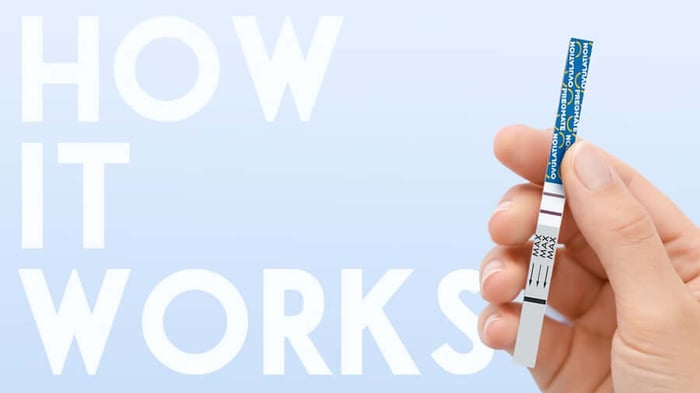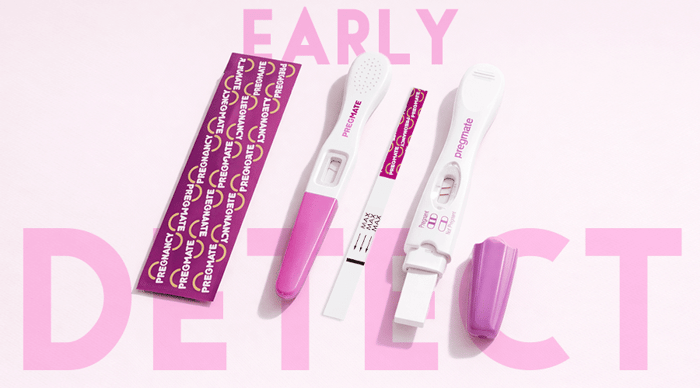
Pregmate tests are more than 99% accurate when used correctly. This guide explains the science, manufacturing standards, and real-world performance behind their pregnancy and ovulation tests, including recent clinical findings that set Pregmate apart.
Quick answer: is Pregmate accurate?
Yes. Pregmate pregnancy and ovulation tests are over 99% accurate in laboratory settings and top-ranked in clinical studies.
Pregnancy tests detect hCG at 25 mIU/mL sensitivity
Ovulation tests detect the LH surge at 25 mIU/mL
All tests are manufactured under ISO 13485 and ISO 9001 standards.
Key takeaways
Pregmate pregnancy tests are over 99% accurate when used with first-morning urine on the day of your expected period or later.
Pregmate ovulation tests identify the fertile window by detecting the LH surge 24–48 hours before ovulation.
Adherence to ISO 13485 and ISO 9001 certifications confirms that Pregmate meets rigorous international quality and safety standards for medical devices.
Why science backs Pregmate
While most brands claim 99% accuracy, Pregmate’s performance is validated by more than just factory standards. A 2025 prospective cohort study published in Fertility and Sterility confirmed that Pregmate ranks among the top-performing kits, showing 96.9% accuracy in real-world clinical settings.
Even more impressive: Pregmate demonstrated a higher sensitivity in detecting LH surges compared to leading premium digital brands. This means Pregmate is more likely to detect your fertile window than some of the most expensive tests on the market.
What does "99% accurate" actually mean?
The "99% accurate" claim refers to three distinct measurements:
Analytical Sensitivity: The lowest hormone level detectable. Pregmate strikes the perfect balance at 25 mIU/mL—sensitive enough for early detection without being so low that it triggers false positives from natural "background" hormone levels.
Clinical Accuracy: Real-world performance. In clinical trials, Pregmate results showed near-perfect consistency with lab-monitored cycles.
Specificity: The ability to tell hormones apart. Pregmate is highly specific to hCG (pregnancy) and LH (ovulation), preventing cross-reactivity with other hormones like FSH or TSH.
Maximizing your results: the bio-individual factor
Human biology is unique, and understanding how your body works helps you get the most out of every strip.
Timing for ovulation (LH)
According to the 2025 study, while accuracy is high, the "surge" window can be narrow.
Test twice daily: If your LH spike is rapid, testing once at 2 p.m. and once at 8 p.m. ensures you capture the peak with confidence.
Avoid dilution: High water intake can "mask" your LH surge. Try to limit fluids for two hours before testing.
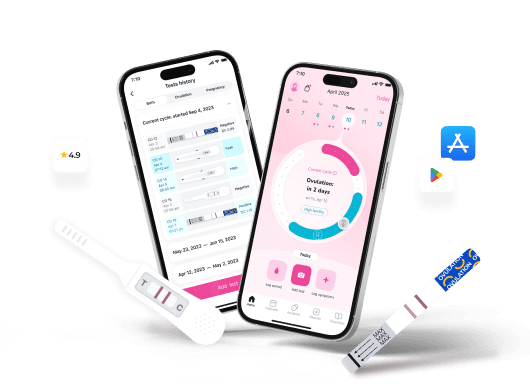
Use the Pregmate app scanner: Eliminate the guesswork of "reading the lines." Use the Pregmate app's built-in scanner to photograph your strips. The app’s algorithm analyzes the density of the lines for you, providing a clear digital interpretation and tracking your hormone trends over time.
Timing for pregnancy (hCG)
- The 48-hour rule: If you’re pregnant, your hCG levels typically double every 48 hours. So if you get a negative or a faint result but still suspect pregnancy, wait two days and test again for a more accurate reading.
- First morning urine: This provides the highest concentration of hCG, which is crucial for early detection before your missed period.
How Pregmate compares to other brands
Recent data shows that "expensive" doesn't mean "more accurate."
Feature | Pregmate | Premium Digital | Other Budget Brands |
Lab Accuracy | >99% | >99% | >95% |
Clinical LH Sensitivity | High | Moderate | Low |
Detection Threshold | 25 mIU/mL | 40 mIU/mL | 25 mIU/mL |
Cost Efficiency | ⭐⭐⭐⭐⭐ | ⭐ | ⭐⭐⭐ |
Data source: Vanderhoff et al., "Similar accuracy and patient experience with different one-step ovulation predictor kits," Fertility and Sterility (2025) .
Why Pregmate is the trusted choice
Pregmate bridges the gap between lab-grade science and home convenience. By pairing world-class manufacturing (ISO 13485 & ISO 9001) with clinical sensitivity that rivals—and often exceeds—premium brands, we offer the clarity you need without the "premium" price tag. With Pregmate, you aren't just buying a test; you’re gaining reliable insights to navigate your fertility journey with total peace of mind.
Frequently Asked Questions (FAQ)
Q: Can Pregmate be as accurate as a digital test?
A: Yes, and in many cases, it’s even more sensitive. While digital tests offer a "Yes/No" readout, the 2025 Fertility and Sterility study showed that Pregmate strips have a higher clinical sensitivity compared to many premium digital brands. You get lab-grade accuracy without paying for the plastic shell.
Q: I see a faint second line on my ovulation test. Is it positive?
A: Unlike pregnancy tests, where any faint line is a "Yes," ovulation tests require the test line to be as dark as or darker than the control line to confirm a peak. A faint line usually means LH is present in your system, but you haven't reached your surge yet.
Q: Why did I miss my LH surge even though I tested daily?
A: Some LH surges are "rapid," lasting less than 10–12 hours. If you test only once a day, you might miss the peak. If you’re approaching your fertile window, we recommend testing twice daily (e.g., 12:00 PM and 8:00 PM) to ensure you capture the surge.
Q: How early can I take a Pregmate pregnancy test?
A: For the most reliable results (99%+ accuracy), it is best to test starting from the first day of your missed period. While the 25 mIU/mL sensitivity can detect pregnancy 11–14 days after ovulation, testing too early may result in a false negative if hCG levels haven't built up enough.
Q: Does drinking water affect my results?
A: Yes, especially for ovulation tests. Over-hydrating can dilute the LH concentration in your urine. For the most accurate reading, try to reduce your fluid intake for about two hours before you plan to test.