

How to Read a Numeric Ovulation Test
Using a standard strip that reads by test and control lines instead? See the full ovulation test strip instructions.
TEST PROCEDURE
Dip the strip into the urine for 5 seconds

Lay the strip flat

Read results in 5 minutes
Positive (LH Surge): Two lines equal or darker → LH surge.

Negative (No LH Surge): One line or test line lighter than control.

MEASURING LH LEVELS
Measuring LH numerically provides better insight into your LH surge, peak, and ovulation window.
Compare the Test Line to the Color Chart. The numbers represent approximate LH levels.

Graph results on the Fertility Chart to track your LH curve month to month.

READING THE RESULTS
Low: Test line lighter than 25.

High: Test line similar/darker than 25 → ovulation within 48h.

Peak: Test line darker than 40 → LH highest level.

Prefer a device that shows a smiley or a digital readout? See the digital ovulation test instructions.
WHEN TO BEGIN TESTING?
Determine your cycle length. If unknown, begin 11 days after first period. Use chart below.
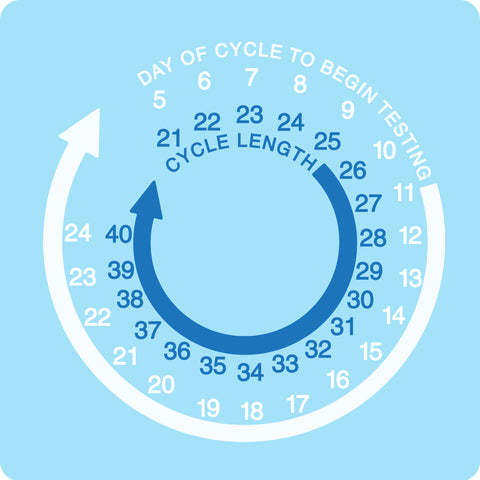
Example: 26-day cycle → start on day 10.
Using midstream tests this cycle? See the ovulation midstream test instructions.
FREQUENTLY ASKED QUESTIONS
Using and timing
How do ovulation test strips with numeric results work? +
What is the difference between numeric and standard ovulation tests? +
When should I start testing, and at what time of day? +
Understanding your results
What LH number means ovulation is coming? +
My LH numbers are always high. What does that mean? +
I always see a faint line. Is that normal? +
Can I scan numeric results in the Pregmate app? +
Medical factors and special cases
Can medications or health conditions affect my numeric readings? +
Do birth control pills affect numeric ovulation tests? +
Does a Peak reading confirm that I ovulated? +
Important reminder
These FAQs and the information on this page are for educational purposes only and should not be used as medical advice. If you experience unusual symptoms or are unsure about your results, consult a healthcare provider.
Try our Mobile App


Tracking two hormones at once? See the pregnancy test strip instructions.
Related blog articles:
- Ovulation explained
- Naturally Boost Your Fertility
- Fertility and age: The truth about getting pregnant after 35
- Male Factor Infertility
- When is your fertile window?
- How long does it actually take to get pregnant?
- Understanding Your Menstrual Cycle: A Comprehensive Guide
- Ovulation Symptoms: Key Signs & Tracking Tips
- Pregmate App – Ovulation Tracker, Fertility and Period Calculator
- Conception explained: Fertilization and Implantation
- Using ovulation tests to identify the most fertile days of the month
- Your IVF Journey: Navigating the Path of In Vitro Fertilization
- A Comprehensive Guide to Pregnancy Tests: Everything You Need to Know
- Understanding IUI Intrauterine Insemination: A Complete Guide
- Pregmate pregnancy test strips: How and when to do the test
- Tracking LH surge using ovulation tests
- What is PCOS?
- What causes PCOS? Symptoms and signs.
- Using ovulation tests with PCOS
- 5 Menopause Myths BUSTED by a Medical Expert
- Your Complete Guide to Egg and Sperm Freezing
- The Hidden Truth About Endometriosis Every Woman Needs to Know
Medically reviewed by Inna Galitsky, MD, PhD. Reviewed: Aug 10, 2026.