One of the most effective ways to increase your fertility naturally is to find your fertile window and time intercourse to it, while keeping your weight, sleep, and habits in a range that supports regular ovulation. No supplement or superfood has been shown to work better than good timing. Most healthy couples conceive within a year of trying, and tracking your LH surge is one of the most practical steps you can take while you are trying.
Below is what the evidence actually supports, what the data says about your odds, and where most people quietly lose time without realizing it.
How long it usually takes to get pregnant
Start with the number that takes the pressure off: in healthy couples having regular intercourse, about 8 in 10 conceive within six months, and roughly 85–90% within a year. For many couples, having sex every 2–3 days is enough to cover the fertile window even without tracking. Conception is partly a numbers game across cycles, not a pass or fail test you take each month.
Difficulty is also common and rarely permanent. Around 1 in 6 people have trouble conceiving at some point, and many go on to get pregnant without treatment. Doctors define infertility as no pregnancy after 12 months of trying, or 6 months if you are 35 or older.
Most of the couples I see are in better shape than they fear. A year of trying is normal, and small changes to weight, sleep, and timing usually do more than anything in the supplement aisle.
Inna Galitsky, MD, PhD, medical reviewer at Pregmate
Know where you are in your cycle. The free Pregmate app tracks your cycle, fertile window, and ovulation, lets you log symptoms, and stays with you into pregnancy, all in one place.
Know your fertile window (this is where most couples lose time)
You can only conceive on a handful of days each cycle. The fertile window is the six-day stretch ending on the day you ovulate. The egg survives about 12 to 24 hours after release, but sperm can wait in the reproductive tract for up to 5 days, so the days before ovulation matter most.
Pregnancy odds are highest when intercourse happens in the two days before ovulation, peaking the day before. Having sex every 1 to 2 days during the fertile window keeps fresh sperm available for the egg without you needing to pinpoint the exact hour.
The challenge is that ovulation timing shifts from cycle to cycle, so a calendar estimate is only a starting point. Your body gives off measurable signals, and each one tells you something different.
Signal | What it measures | What it tells you | When it helps |
LH ovulation test (OPK) | the surge in luteinizing hormone in urine, read as the T/C ratio (test line vs. control line) | ovulation is likely in the next 12 to 36 hours | predicting ovulation before it happens, so you can time the days that matter |
basal body temperature | a small rise in resting temperature driven by progesterone | confirms ovulation has already happened | spotting patterns over several cycles, not timing in real time |
cervical mucus | estrogen-driven changes in vaginal discharge | your most fertile days are near when mucus turns clear, stretchy, and slippery, like raw egg white | a free daily check that peaks just before ovulation |
cycle calendar / app prediction | the length and pattern of your past cycles | an estimated window for when to start testing | a useful starting point, especially with regular cycles |
On an ovulation test, the part that trips people up is reading faint lines. A test is only positive when the test line (T) is as dark as or darker than the control line (C). That relationship is the T/C ratio, and it is the standard for reading a true LH surge.
Read the surge, don't guess at it. Pregmate ovulation test strips detect your LH surge. Scan each strip in the Pregmate app and it reads the T/C ratio for you, so a positive is a clear yes.
When someone has been trying for months with no luck, it is rarely about effort. Sometimes the fertile days are simply missed, especially because ovulation does not always occur on the same cycle day. Once someone starts tracking the fertile window instead of guessing, the picture often becomes clearer.
Inna Galitsky, MD, PhD, medical reviewer at Pregmate
Reach a weight that supports ovulation
Body weight shapes how you make the hormones that drive ovulation. A high BMI is linked to irregular or absent ovulation, while very low body fat (often from extreme dieting or heavy training) can shut ovulation down entirely, a state called functional hypothalamic amenorrhea.
You do not need a dramatic transformation. For people with a high BMI, even a modest, sustainable loss can restore more regular cycles. The same holds for men: in a randomized trial, diet-induced weight loss raised sperm count, and the gains held when the men kept exercising.
Move your body, without overdoing it
Moderate activity helps fertility by supporting a healthy weight, steadier insulin, and lower stress. Most days, aim for about 30 minutes of walking, swimming, cycling, or strength work.
More is not better here. Very intense, high-volume training can disrupt ovulation in women and temporarily lower sperm quality in men. If your periods become irregular after ramping up workouts, that is a signal to ease off.
Eat a balanced pattern, not a fertility diet
No specific food or diet can guarantee pregnancy. A Mediterranean-style eating pattern, built around whole grains, vegetables, fruit, legumes, nuts, and healthy fats, is a balanced choice for overall health and is the pattern most often studied in fertility research.
Diet is a big topic on its own. For the specific foods worth putting on your plate while trying to conceive, see our guide to fertility-friendly foods.
Rethink alcohol, caffeine, and smoking
Smoking is the clearest one to drop. It damages eggs, raises sperm DNA fragmentation, and lowers sperm concentration, and the effects hit both partners. Quitting is one of the highest-impact changes a couple can make.
Keep alcohol minimal while trying. Heavier drinking is tied to a longer time to pregnancy and reduced sperm quality, and there is no amount considered safe once you are pregnant, so many people simply stop while trying.
The evidence on caffeine is mixed, and moderate intake looks fine for most people. A reasonable target is under about 200 mg a day (roughly one to two cups of coffee). Some studies link higher caffeine and regular soda to a longer time to conceive, so soda is the easier thing to cut first.
Protect your sleep and manage stress
Sleep and stress both feed the hormone system that controls your cycle. Chronic stress raises cortisol, which can delay ovulation, and poor sleep pulls the same levers in the wrong direction.
To be clear, everyday stress does not cause infertility, and “just relax” is not a treatment. The point is that protecting your sleep and finding a wind-down that works for you makes the rest of these changes easier to stick with.
A few myths worth dropping
Some of the most common advice quietly works against you. Here is what holds up and what does not.
Common belief | What is actually true |
You always ovulate on day 14. | Day 14 is an average, not a rule. Ovulation can land days earlier or later and shifts from cycle to cycle, which is exactly why tracking your LH surge beats counting calendar days. |
Lie still with your hips up after sex. | There is no good evidence this improves your odds. Sperm reach the fallopian tubes within minutes, so you do not need to stay pinned to the bed. |
Any lubricant is fine. | Many standard lubricants, and saliva, can slow sperm down. If you need one, choose a fertility-friendly (sperm-safe) lubricant labeled for couples trying to conceive. |
Don't forget the male half
Fertility is not only a female concern. A male factor is involved in roughly 40 to 50 percent of couples who struggle to conceive, so both partners should make changes together.
Here is the useful part: sperm take about 74 to 90 days (roughly two to three months) to fully develop. The health choices a man makes today show up in his sperm about three months later, so there is a real payoff to starting early. Cutting smoking and heavy drinking, reaching a healthier weight, and keeping the testicles cool (skip frequent saunas, hot tubs, and laptops on the lap) all help.
Take a prenatal with folic acid before you conceive
This one is less about getting pregnant and more about a healthy pregnancy, but it belongs on the list. Start a daily 400 micrograms of folic acid at least one month before you start trying to lower the risk of neural tube defects, since they form in the earliest weeks, often before you know you are pregnant.
When to see a doctor
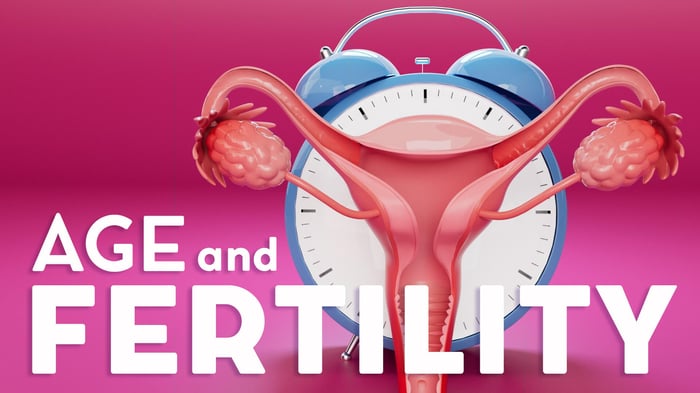
Trying naturally is the right first step for most people, but timing your visit matters. The guideline is based on age, because fertility declines faster after 35.
Your age | See a specialist after |
under 35 | 12 months of trying |
35 to 39 | 6 months of trying |
40 and over | consider an evaluation right away |
Go sooner, regardless of age, if you have irregular or absent periods, a known condition such as PCOS or endometriosis, a history of pelvic infection or surgery, or any concern about sperm. Earlier answers are almost always better than waiting.
The bottom line
Increasing your fertility naturally is mostly about two things: knowing when you ovulate and giving your body steady conditions to do it. Track your fertile window, time intercourse to the two days before ovulation, keep your weight, sleep, and habits in a supportive range, and get both partners involved. If a year goes by (or six months after 35), see a doctor.
These steps may improve your chances, but they cannot overcome every medical cause of infertility.
Frequently asked questions
How can I increase my fertility naturally and quickly?
Timing is the part you can change the fastest. Use ovulation tests to catch your LH surge and have intercourse in the two days before ovulation. Pair that with not smoking, limited alcohol, and a healthy weight, and you can help improve your chances of conception.
What is the best way to get pregnant naturally?
Identify your fertile window and have sex every 1 to 2 days during it. Tracking your LH surge with an ovulation test is one of the most reliable ways to know when that window opens.
How can I boost ovulation naturally at home?
You cannot force ovulation with home remedies, but you can support it: reach a healthy weight, exercise moderately rather than excessively, manage stress and sleep, and avoid smoking. If you are not ovulating regularly, see a doctor, since conditions like PCOS are treatable.
Can stress stop me from getting pregnant?
High, chronic stress can delay ovulation by affecting your hormones, but ordinary stress does not cause infertility, and “relax and it will happen” is a myth. Managing stress mainly helps you stay consistent with the changes that do move the needle.
Sources
Practice Committee of the American Society for Reproductive Medicine. Optimizing natural fertility: a committee opinion. Fertility and Sterility, 2022. asrm.org
Centers for Disease Control and Prevention, National Center for Health Statistics. Infertility and Impaired Fecundity in Women and Men, United States (NHSR No. 202). 2024. cdc.gov
U.S. Department of Health and Human Services, Office on Women's Health. Infertility. Updated 2026. womenshealth.gov
World Health Organization. Infertility prevalence estimates, 1990 to 2021. 2023. who.int
Andersen E, Juhl CR, Kjoller ET, et al. Sperm count is increased by diet-induced weight loss and maintained by exercise or GLP-1 analogue treatment: a randomized controlled trial. Human Reproduction, 2022. academic.oup.com
Cleveland Clinic. How to increase sperm count and improve male fertility. 2025. clevelandclinic.org
American College of Obstetricians and Gynecologists. Having a baby after age 35: how aging affects fertility and pregnancy. acog.org
This article is for general educational purposes and is not medical advice. It does not replace a consultation with a qualified healthcare provider. If you have concerns about your fertility or any medical condition, talk to your doctor.